Client Collaboration:
Best Practices for Web Development
How Modern Teams Deliver Faster, Smarter, and More Profitable Website Projects
In 2026, building a website isn’t just about design or development anymore.
It’s about coordination.
It’s about clarity.
It’s about how well your internal team and your development partner work together.
Because today’s websites are no longer “online brochures.” They are:
- lead generation engines
- marketing automation hubs
- sales funnels
- analytics centers
- and sometimes full business platforms
Which means one simple truth:
Poor collaboration can break a project faster than bad code ever could.
At MindCentrix, we’ve worked with startups, healthcare brands, SaaS companies, and multi-location businesses across regions. And we consistently see the same pattern:
The smoothest launches don’t come from bigger budgets.
They come from better processes.
That’s why understanding the best practices for client collaboration in web development has become mission-critical in 2026.
Teams that collaborate well ship faster, spend less, and grow more.
Teams that don’t?
They drown in revisions, delays, and frustration.
This guide walks you through exactly how modern businesses should collaborate with their web partners today — not how they did it five years ago.
TL;DR
If you want your web project delivered faster and with fewer headaches:
- Define business goals first
- Assign one decision-maker
- Use shared tools and dashboards
- Work in short sprints
- Keep weekly alignment calls
- Track KPIs, not opinions
- Continue optimizing after launch
Good collaboration can reduce rework by 40–60%.
Why Collaboration Matters More in 2026 Than Ever
A few years ago, websites were simpler.
Today?
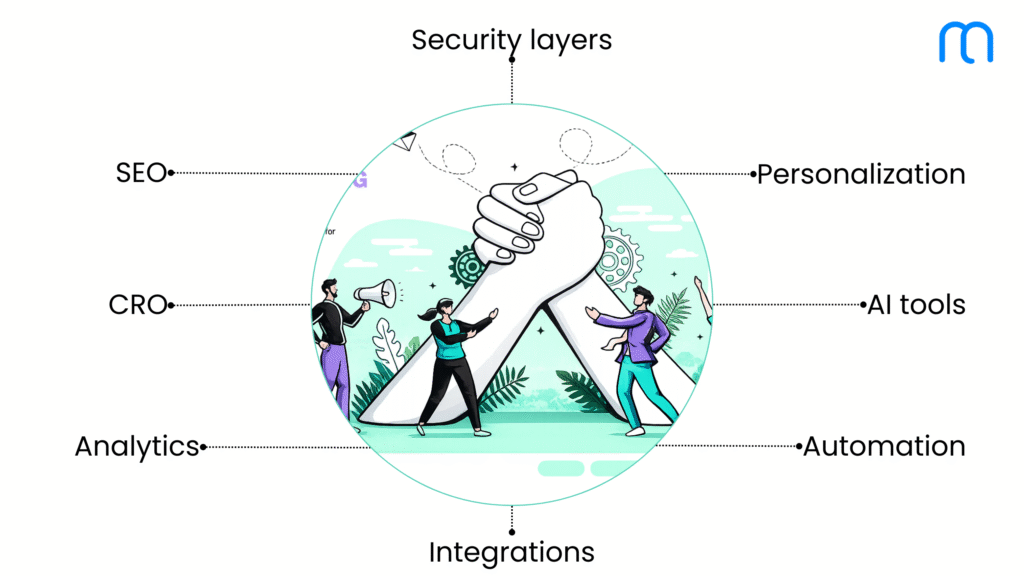
They involve:
- SEO
- CRO
- analytics
- integrations
- automation
- AI tools
- personalization
- security layers
That’s a lot of moving parts.
When multiple stakeholders and technologies are involved, miscommunication multiplies quickly.
One unclear instruction can delay an entire sprint.
One missing approval can block development for days.
This is exactly why structured workflows and the best practices for client collaboration in web development are no longer “nice-to-have.” They’re essential.
In 2026, speed is competitive advantage.
And speed comes from alignment.
Start With Outcomes, Not Features
One of the most common mistakes businesses still make is starting conversations like this:
“We want a new design, chatbot, animations, and dashboards.”
But here’s the problem — features don’t guarantee growth.
Outcomes do.
Before anything is designed or coded, both the client and the agency must align on questions like:
- What revenue should this site generate?
- How many leads per month do we need?
- What actions should users take?
- What does success look like after 6 months?
When goals are clear, every decision becomes strategic instead of subjective.
Suddenly, it’s not:
“I like this design more.”
It becomes:
“This version converts 18% better.”
That shift alone changes the entire tone of collaboration and is one of the most powerful best practices for client collaboration in web development.
Define Roles So Decisions Don’t Stall
Here’s something we see often: too many cooks.
Marketing wants one thing.
Sales wants another.
Founders want something else.
Result? Endless revisions.
Healthy collaboration needs structure.
Every project should have:
- one primary client-side owner
- one agency-side project lead
These two people make final decisions and keep things moving.
Without clear ownership, projects slow down because everyone is “consulted” but no one is accountable.
When roles are defined, approvals happen faster, communication improves, and stress drops dramatically.
In real-world projects, this alone can cut weeks off the timeline.

Get an Expert Google Ads Audit for Your Business
Uncover wasted spend, fix performance gaps, and scale ROI with certified Google Ads specialists.
Run a Real Discovery Phase (Don’t Skip This)
In 2026, skipping discovery is risky — especially with complex tech stacks and AI integrations.
Discovery isn’t paperwork. It’s strategy.
This is where both sides deeply understand:
- business goals
- customer behavior
- competitors
- SEO opportunities
- required integrations
- content structure
Think of discovery as building the blueprint before construction.
Without it, you’ll keep rebuilding walls later.
We’ve seen clients try to “save time” by skipping discovery… only to spend 3x more time fixing misunderstandings later.
That’s why serious teams treat planning as one of the core best practices for client collaboration in web development.
Use Modern Collaboration Tools (Email Isn’t Enough)
In 2026, managing projects through email alone is outdated.
You need shared, real-time systems.
Modern teams use:
- Slack or Teams for daily communication
- ClickUp/Asana/Jira for task tracking
- Figma for live design collaboration
- Notion/Docs for documentation
- GA4 or dashboards for performance
These tools create transparency.
Everyone sees what’s happening.
No more “Where are we with this?” messages.
When visibility improves, trust improves — and trust is the foundation of good collaboration.
Adopt Sprint-Based Workflows
Long timelines create uncertainty.
Short cycles create clarity.
That’s why agile sprints work so well.
Instead of waiting months to see the final website, clients review progress every 1–2 weeks.
This allows:
- faster feedback
- quicker fixes
- continuous improvement
- fewer surprises
In fast-moving markets, agility matters more than perfection.
Sprint-based execution has become one of the most reliable best practices for client collaboration in web development, especially for growing businesses.
Make Feedback Specific and Actionable
“Make it better” is not feedback.
It’s confusion.
Good collaboration requires structured input.
Effective feedback answers:
- What’s the issue?
- Why is it a problem?
- What should change?
- How urgent is it?
Clear instructions help developers implement changes faster and reduce back-and-forth cycles.
Small clarity saves huge time.
Use Data to Guide Decisions (Not Opinions)
In 2026, guesswork is unnecessary.
Analytics tell you everything.
Instead of debating design preferences, measure:
- conversion rates
- user behavior
- heatmaps
- bounce rates
- page speed
When both teams rely on data, discussions become productive instead of emotional.
Data-driven collaboration builds better results and stronger trust.
Treat Launch as the Beginning, Not the End
Many businesses celebrate launch day like it’s the finish line.
But the reality?
Launch is day one.
The real growth happens after:
- A/B testing
- SEO optimization
- CRO improvements
- speed enhancements
- content updates
Ongoing collaboration turns a website into a growth engine rather than a static asset.
This long-term mindset is what separates average sites from high-performing ones.
How MindCentrix Makes Collaboration Easy
At MindCentrix, collaboration is built into our system.
We provide:
✔ dedicated project managers
✔ weekly sync calls
✔ sprint-based delivery
✔ shared dashboards
✔ clear reporting
✔ post-launch optimization
Because we believe successful websites aren’t built by agencies alone.
They’re built through partnership.
Ready to Build Smarter in 2026?
If your last web project felt slow or chaotic, it wasn’t bad luck — it was poor collaboration. Let’s fix that with a clearer process, faster delivery, and measurable results.
Book a Free Strategy AuditFrequently Asked Questions

Bhavisya
Written by Bhavisya, a web development and digital strategy specialist at MindCentrix, with years of hands-on experience delivering high-performing websites and growth systems for startups, SaaS companies, and multi-location businesses worldwide.
He has led cross-functional projects combining UX design, custom development, SEO, analytics, and marketing automation — helping brands launch faster, reduce revisions, and improve ROI through structured collaboration and agile workflows.
Bhavisya focuses on building scalable digital ecosystems where strategy, technology, and client collaboration work together — ensuring every website is not just visually strong, but measurable, conversion-driven, and business-ready.

Boost Your Brand Visibility 🚀
Get personalized digital strategies that drive growth and engagement.
Let’s Talk📬 Stay Updated
Get the latest insights and guides delivered right to your inbox.
🔗 Related Topics
- Loading related posts...