Shopify Ecommerce Development Company:
The Complete Leader’s Guide to Choosing, Building, and Scaling

Everything a founder, CMO, or Head of Ecommerce actually needs to know — before writing a single check.
- 1What a Shopify ecommerce development company actually delivers - and what separates high-impact partners from expensive mistakes
- 2When to choose Shopify vs. Shopify Plus - and the real cost implications behind that decision
- 3The 6 critical gaps leaders overlook during project planning (and why they lead to budget overruns)
- 4Realistic cost ranges, timelines, and hidden expenses most agencies don’t disclose upfront
- 5The exact questions to ask before signing any development contract
- 5How to evaluate whether your current Shopify setup is quietly losing revenue
Introduction
Here’s a conversation happening in boardrooms, Slack channels, and Zoom calls across fast-growing brands:
“We need to get our Shopify store right.”
Sometimes it’s a brand stuck in plugin chaos after years on WooCommerce.
Sometimes it’s a DTC startup running on a basic theme with flatlining conversions.
Sometimes it’s a multi-million-dollar retailer preparing for scale – and realizing their current infrastructure won’t survive peak traffic.
But beneath all of these scenarios lies a more important question:
Who do we trust to build, optimize, and scale this properly?
Because choosing the wrong Shopify ecommerce development company isn’t just a delay.
It’s:
- Missed revenue
- Technical debt
- Broken customer experiences
- And often… a complete rebuild within 12–18 months
This guide is built for decision-makers who don’t want guesswork.
It gives you a clear, strategic framework to evaluate partners, understand trade-offs, and invest with confidence.
Why Shopify Still Dominates the Ecommerce Conversation
Let’s start with context.
Shopify isn’t just popular – it’s infrastructure for modern commerce.
By the Numbers:
- 4.5M+ active Shopify stores globally
- $235B+ in annual gross merchandise value (GMV)
- Presence in 175+ countries
- ~10% share of total US ecommerce
This scale matters.
Because it creates:
- A massive app ecosystem
- Deep integration capabilities
- A global talent pool of developers and partners
But here’s the key insight most leaders miss:
Shopify is a platform – not a strategy.
Two companies can use Shopify and see completely different outcomes.
The difference comes down to:
- Architecture decisions
- UX and conversion design
- Integration strategy
Performance optimization
What a Shopify Ecommerce Development Company Actually Does
A real Shopify ecommerce development company doesn’t “build websites.”
It builds commerce systems designed to generate revenue, scale operations, and reduce friction.
Core Capabilities You Should Expect
- Custom Theme Development
This goes far beyond buying a theme and tweaking colors.
It involves:
- Custom UX architecture
- Tailored design systems
- Clean, scalable code using Liquid, HTML, CSS, and JavaScript
A custom build ensures your store reflects your brand, positioning, and conversion goals – not someone else’s template.
- App & Integration Development
Modern ecommerce doesn’t operate in isolation.
Your Shopify store needs to integrate with:
- ERP systems
- CRM platforms
- Email marketing tools
- Inventory and logistics systems
- Analytics platforms
A capable partner ensures everything works together without breaking performance.
- Shopify Plus Development
For scaling brands, Shopify Plus unlocks:
- Advanced automation (Shopify Flow)
- Custom checkout experiences
- B2B functionality
- Multi-store management
But Plus is not a default upgrade – it’s a strategic decision.
- Performance Optimization
Speed is not a technical detail – it’s a revenue driver.
A Shopify ecommerce development company should optimize for:
- Core Web Vitals
- Page load speed
- Mobile performance
- Code efficiency
Because even small delays impact conversions significantly.
- Platform Migration
Migrating from platforms like:
- WooCommerce
- Magento
- BigCommerce
…requires careful handling of:
- Product data
- Customer records
- Order history
- SEO structure
Poor migrations often result in traffic loss that takes months to recover.
- Headless Commerce Development
For advanced brands, headless architecture separates frontend and backend.
This enables:
- Faster performance
- Custom experiences
- Greater flexibility
But it also introduces complexity – making partner expertise critical.

Get an Expert Google Ads Audit for Your Business
Uncover wasted spend, fix performance gaps, and scale ROI with certified Google Ads specialists.
Shopify vs. Shopify Plus: The Decision That Impacts Everything
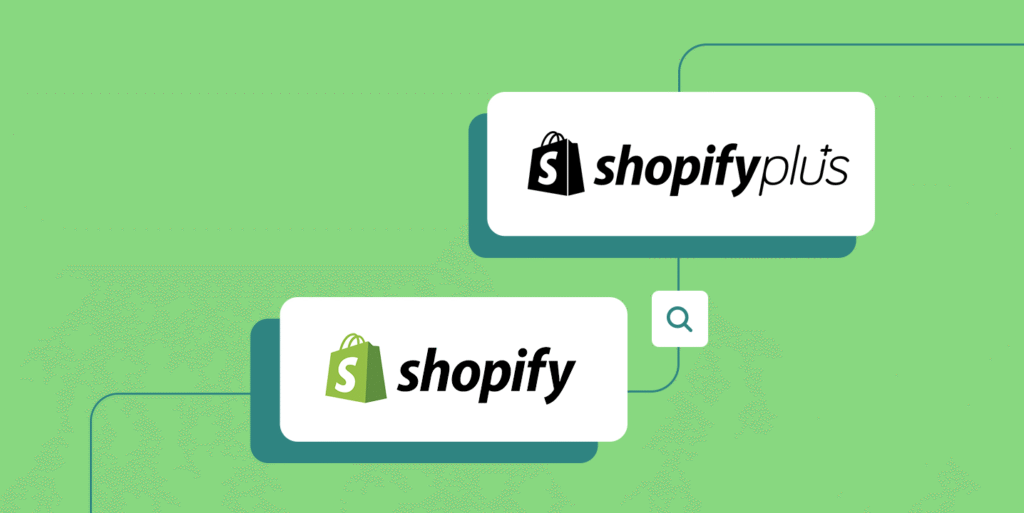
One of the most misunderstood decisions in ecommerce is when to upgrade.
Shopify (Standard)
- $39–$399/month
- Limited checkout customization
- Ideal for small to mid-sized brands
Shopify Plus
- Starts around $2,500/month
- Full checkout control
- Automation workflows
- B2B capabilities
- Multi-store support
Strategic Rule of Thumb:
- Under $1M–$2M annual revenue → Shopify
Scaling operations / complex workflows → Shopify Plus
Important Insight
Upgrading too early increases costs without delivering value.
Upgrading too late creates operational bottlenecks.
The right Shopify ecommerce development company helps you time this correctly.
The 6 Things Leaders Overlook (That Blow Budgets Later)
This is where most projects go wrong.
- Undefined Conversion Goals
Without clear KPIs, development becomes subjective.
- Integration Complexity
Every external tool adds cost, time, and risk.
- Content & Asset Readiness
Delays in product data, images, and copy slow projects significantly.
- Mobile Optimization
Most traffic is mobile – but many stores are still desktop-first.
- Post-Launch Roadmap
Launch is not the finish line – it’s the starting point.
- Internal Alignment
Stakeholder misalignment leads to scope creep and delays.
Core Services You Should Demand
- True Custom Development
No shortcuts. No over-reliance on templates.
- Built-in Conversion Optimization (CRO)
Every design and development decision should support revenue growth.
- Integration Expertise
Your store should function as part of a larger business ecosystem.
- Ongoing Support & Iteration
The best stores evolve continuously.
Costs & Timelines (Realistic Breakdown)
Project Type | Cost Range | Timeline |
Theme Setup | $3K – $8K | 2–4 weeks |
Custom Build | $12K – $35K | 6–10 weeks |
Shopify Plus | $30K – $100K+ | 10–20 weeks |
Migration | $8K – $40K | 6–14 weeks |
Headless Commerce | $60K – $250K+ | 16–36 weeks |
Retainer | $3K – $15K/month | Ongoing |
Reality Check
Your total cost will likely be 30–50% higher than the development quote.
Why?
- Paid apps
- Ongoing support
- Marketing tools
- Optimization work
How to Choose the Right Shopify Ecommerce Development Company
This decision has long-term impact.
What Actually Matters:
- Review live stores (not just case studies)
- Verify Shopify Partner status
- Speak with real client references
- Evaluate their discovery process
- Understand who will actually work on your project
- Confirm post-launch support structure
Red Flags to Watch Out For
- No real, live projects
- Instant quotes without discovery
- No mention of conversion metrics
- Lack of technical transparency
- No clarity on code ownership
If you see these – walk away.
Migration to Shopify: What Most Companies Get Wrong
Migration is not just data transfer.
It’s a business-critical operation.
A proper migration includes:
- Product catalog
- Customer data
- Order history
- SEO (301 redirects, metadata)
- App & integration setup
Critical Warning
SEO mistakes during migration can take 12–18 months to recover.
Measuring ROI: What Leaders Should Track
Before investing, define success.
Key Metrics:
- Conversion rate
- Average order value (AOV)
- Cart abandonment rate
- Page load speed
- Revenue per visitor
Real Example:
- +0.5% conversion increase → +$25,000 revenue
- +10% AOV increase → +$500,000 revenue
Same traffic. Higher efficiency.
The Future of Shopify Development
Forward-thinking brands are already investing in:
- AI-driven personalization
- Headless commerce
- Subscription models
- Omnichannel commerce
- Advanced analytics
The gap between average and elite ecommerce brands will continue to widen.


Boost Your Brand Visibility 🚀
Get personalized digital strategies that drive growth and engagement.
Let’s Talk📬 Stay Updated
Get the latest insights and guides delivered right to your inbox.
🔗 Related Topics
- Loading related posts...