Programmatic Advertising Agency Guide:
Scaling Revenue with AI-Driven Bidding & Privacy-First Media Buying
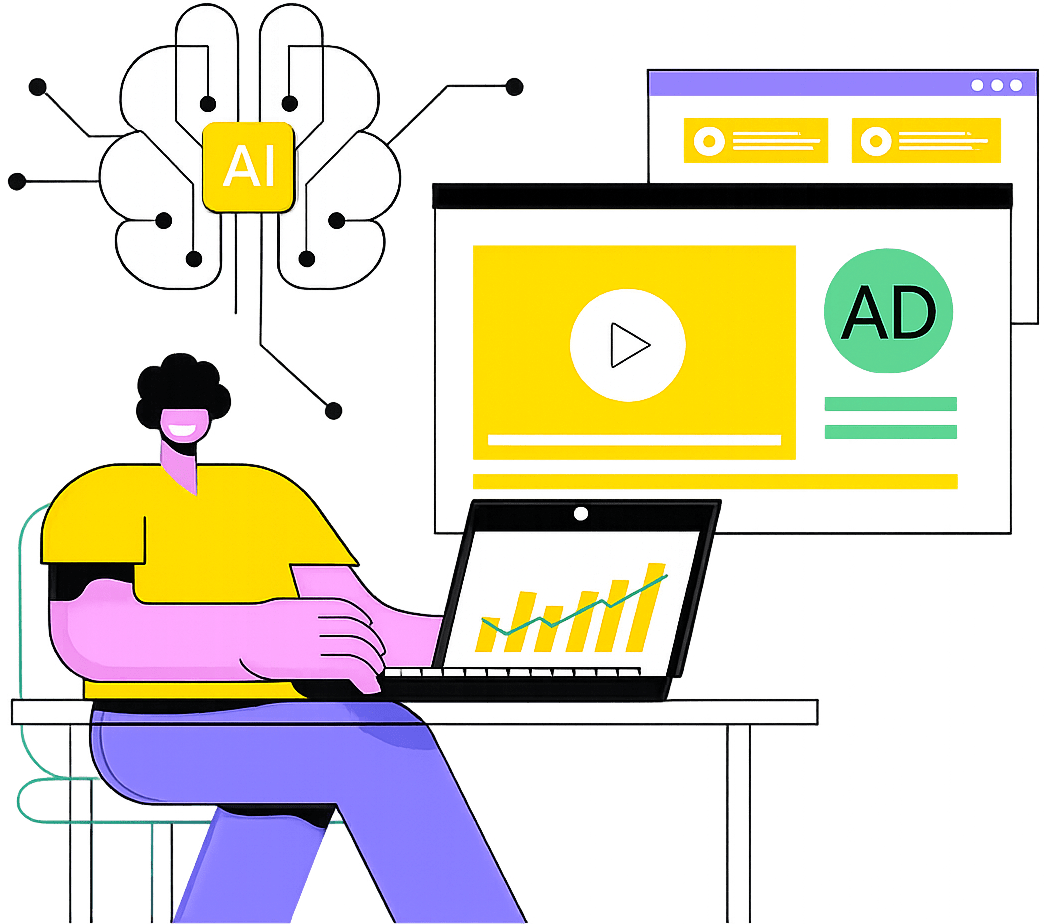
Modern advertising has moved far beyond manual media buying and static campaign optimization. Today, brands operate in an environment where data, artificial intelligence, and privacy regulations shape every marketing decision. In this landscape, programmatic advertising has become the dominant way organizations reach audiences efficiently and at scale.
A programmatic advertising agency helps businesses navigate this complex ecosystem by combining automated technology, AI-driven bidding systems, and privacy-compliant data strategies to deliver measurable advertising outcomes across multiple digital channels.
For organizations focused on growth, working with agencies specializing in programmatic advertising is no longer simply an operational decision—it is a strategic investment in scalable customer acquisition.
TL;DR (Key Takeaways)
A programmatic advertising agency is a specialized marketing partner that uses AI-powered technology, automated bidding systems, and first-party data to buy and optimize digital advertising inventory in real time.
Instead of manually negotiating ad placements, agencies specializing in programmatic advertising use machine learning algorithms and audience data to deliver targeted campaigns across channels such as display, video, connected TV, audio, retail media, and digital out-of-home.
Key insights for decision makers:
- Programmatic now represents the majority of digital media buying.
- AI bidding engines continuously optimize campaigns for better performance.
- Privacy-first identity frameworks are replacing third-party cookies.
- Modern agencies use data clean rooms, attention metrics, and incrementality measurement to demonstrate true business impact.
- Programmatic advertising enables scalable growth across emerging channels like connected TV and retail media networks.
What Is a Programmatic Advertising Agency?
A programmatic advertising agency is a specialized digital marketing partner that uses automated technologies and artificial intelligence to purchase digital advertising inventory in real time across multiple channels.
Rather than negotiating placements manually, programmatic agencies use algorithmic bidding systems, audience data, and performance signals to determine when and where ads should appear.
The result is a more efficient and scalable advertising model that enables organizations to reach the right audiences with precision.
The Evolution from Manual Media Buying to AI-Driven Advertising
Traditional advertising relied heavily on manual negotiations between advertisers and publishers. Media buyers would select websites or channels based on estimated audience reach and historical performance.
Programmatic advertising transformed this process by introducing real-time bidding marketplaces where advertising inventory can be purchased in milliseconds. Today, artificial intelligence enhances these systems by analyzing vast amounts of data to determine the optimal bid for each ad impression.
This shift has turned programmatic advertising into a data-driven growth engine rather than simply a media buying tool.
What Agencies Specializing in Programmatic Advertising Actually Do
While programmatic platforms automate many processes, successful campaigns require expertise in strategy, data, and optimization.
A programmatic advertising agency typically provides:
- Programmatic media strategy and planning
- AI-driven bidding management
- audience targeting and segmentation
- creative testing and optimization
- campaign performance analysis
- cross-channel advertising management
By combining technology with strategic insight, these agencies help businesses maximize advertising efficiency and return on investment.
Get an Expert Google Ads Audit for Your Business
Uncover wasted spend, fix performance gaps, and scale ROI with certified Google Ads specialists.
Why Programmatic Advertising Has Become the Default Growth Channel
Programmatic advertising is now the foundation of modern digital marketing strategies. Several key factors have contributed to its rapid adoption.
The Shift from Search to Discovery-Driven Advertising
While search advertising captures intent, many consumers discover brands through video platforms, streaming services, social feeds, and digital content ecosystems.
Programmatic advertising enables brands to reach audiences earlier in the buying journey by delivering relevant messages during the discovery phase.
AI-Driven Media Buying at Scale
Artificial intelligence plays a central role in modern programmatic advertising. AI systems can analyze massive datasets—including user behavior, contextual signals, and historical campaign performance—to determine the best bidding strategy for each impression.
These systems continuously adjust bids, placements, and creative variations to improve campaign performance over time.
Privacy-First Advertising in the Cookieless Era
The decline of third-party cookies has forced organizations to rethink their advertising strategies. Programmatic agencies now rely on privacy-first identity frameworks and first-party data to maintain targeting accuracy while respecting regulatory requirements.
This shift has elevated the role of data strategy within programmatic advertising.
Supply Path Optimization and Sustainable Media Buying
Modern advertisers are increasingly concerned about transparency and sustainability in digital advertising.
Supply Path Optimization (SPO) helps brands reduce unnecessary intermediaries in the programmatic supply chain. By streamlining ad transactions, agencies can lower costs while also reducing the environmental impact associated with excessive ad calls.
Expansion into Retail Media Networks
Retail platforms have emerged as powerful advertising ecosystems. Programmatic advertising now enables brands to access inventory within ecommerce environments where consumers are actively researching or purchasing products.
This convergence of advertising and commerce has created new opportunities for data-driven customer acquisition.
Core Services Offered by Agencies Specializing in Programmatic Advertising
Programmatic advertising agencies provide a wide range of services designed to improve campaign performance and scalability.
Programmatic Media Strategy and Audience Planning
Effective campaigns begin with a comprehensive understanding of the target audience. Agencies use behavioral data, demographic insights, and contextual signals to build detailed audience profiles.
These insights guide channel selection, budget allocation, and campaign objectives.
AI-Driven Bidding and Campaign Optimization
Modern programmatic platforms rely heavily on machine learning algorithms to determine bidding strategies.
These systems analyze multiple signals in real time, including:
- user behavior patterns
- device and location data
- historical campaign performance
- contextual content signals
The goal is to place the right bid for every impression while maximizing campaign efficiency.
Identity Resolution and Cookieless Targeting
As privacy regulations evolve, identity resolution has become a critical capability in programmatic advertising.
Agencies help brands establish privacy-compliant identity frameworks that combine:
- first-party data
- contextual targeting signals
- identity graphs
This approach allows advertisers to maintain audience targeting capabilities without relying on traditional tracking cookies.
Data Clean Room Management
Data clean rooms provide a secure environment where advertisers and publishers can collaborate on audience insights without exposing sensitive customer data.
Programmatic agencies often help organizations implement clean room strategies that enable privacy-safe audience matching, measurement, and analytics.
Generative AI Creative Scaling
Creative optimization has evolved dramatically in recent years. Instead of manually producing multiple ad variations, agencies can now use generative AI tools to produce hundreds of creative versions tailored to different audiences and placements.
This approach enables continuous testing and personalization at scale.
Cross-Channel Programmatic Advertising
One of the biggest advantages of programmatic advertising is the ability to manage campaigns across multiple digital channels.
These channels often include:
- display advertising
- video advertising
- connected TV
- digital audio and podcast advertising
- native advertising
- retail media placements
- programmatic digital out-of-home advertising
By coordinating campaigns across these environments, agencies can create cohesive omnichannel marketing strategies.
How a Programmatic Advertising Agency Works
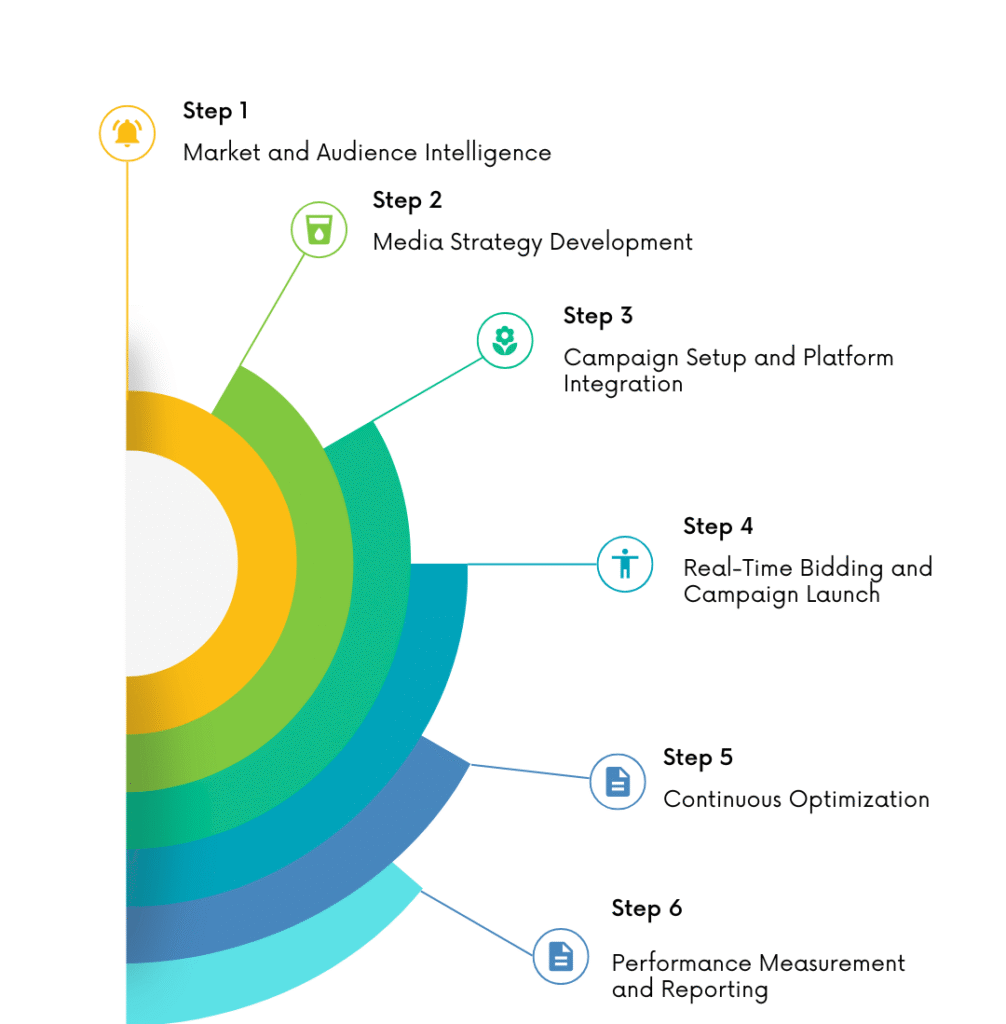
The programmatic campaign process typically follows a structured workflow designed to maximize efficiency and performance.
Step 0: Identity Resolution
Before campaigns begin, agencies establish privacy-compliant identity signals based on first-party data and contextual insights.
This ensures that targeting strategies remain effective even in a cookieless environment.
Step 1: Market and Audience Intelligence
Agencies conduct detailed research to understand:
- target audience behavior
- competitive advertising strategies
- channel performance benchmarks
These insights inform campaign planning.
Step 2: Media Strategy Development
Based on research findings, agencies develop a programmatic media strategy that defines campaign goals, budget allocation, and channel priorities.
Step 3: Campaign Setup and Platform Integration
Campaigns are configured within demand-side platforms and integrated with analytics tools, customer data platforms, and creative systems.
Step 4: Real-Time Bidding and Campaign Launch
Once campaigns launch, automated bidding systems begin purchasing advertising inventory through digital exchanges in real time.
Each ad impression is evaluated based on its potential value to the advertiser.
Step 5: Continuous Optimization
Programmatic campaigns are constantly optimized through machine learning models that analyze performance data and adjust strategies accordingly.
Optimization may involve changes to bids, creative assets, audience segments, or placements.
Step 6: Performance Measurement and Reporting
Agencies provide ongoing performance reports that highlight campaign results, audience insights, and recommendations for future improvements.
Key KPIs Decision Makers Should Track
Evaluating programmatic advertising performance requires more than basic metrics like impressions or clicks.
Modern organizations focus on metrics that demonstrate true business impact.
Important KPIs include:
- Return on Ad Spend (ROAS)
- Customer Acquisition Cost (CAC)
- Cost per Thousand Impressions (CPM)
- conversion rate
- viewability rate
More advanced metrics include attention metrics, which measure how long users actually engage with an advertisement, and incrementality, which evaluates whether conversions occurred because of advertising exposure.
Challenges in Programmatic Advertising (and How Agencies Solve Them)
Although programmatic advertising offers significant advantages, it also presents several challenges.
Common issues include:
- ad fraud and invalid traffic
- made-for-advertising websites
- complex supply chains
- privacy compliance requirements
- attribution complexity
Experienced agencies address these challenges through advanced verification tools, supply path optimization strategies, and sophisticated measurement frameworks.
When Should Businesses Partner with a Programmatic Advertising Agency?
Organizations typically benefit from programmatic expertise when they want to:
- scale digital advertising campaigns rapidly
- improve the efficiency of display and video advertising
- expand into emerging channels such as connected TV
- manage complex advertising technology stacks
- leverage first-party data more effectively
For companies focused on growth, programmatic advertising provides a scalable foundation for customer acquisition.
How to Choose the Right Programmatic Advertising Agency
Selecting the right partner requires evaluating several key capabilities.
Decision makers should consider:
- the agency’s technology stack and platform expertise
- transparency in media buying and reporting
- data strategy and privacy compliance practices
- cross-channel advertising experience
- measurement and analytics capabilities
A strong programmatic partner should combine technical expertise, strategic insight, and transparent reporting.
Future Trends Shaping Programmatic Advertising
Programmatic advertising continues to evolve as new technologies reshape the digital marketing ecosystem.
Important trends include:
- AI agents that autonomously manage campaign optimization
- cookieless identity frameworks replacing traditional tracking methods
- expansion of retail media networks
- increased adoption of connected TV advertising
- generative AI for creative production and testing
- sustainability initiatives within digital advertising supply chains
Organizations that adapt to these changes will gain a competitive advantage in digital customer acquisition.
Final Thoughts
Programmatic advertising has evolved from a niche digital advertising technique into a central component of modern marketing strategies.
By combining AI-driven bidding systems, privacy-compliant identity frameworks, and cross-channel advertising capabilities, programmatic advertising agencies enable organizations to reach the right audiences with precision and scale.
For businesses seeking sustainable growth in an increasingly competitive digital landscape, programmatic advertising offers a powerful pathway to efficient customer acquisition, measurable ROI, and long-term marketing success.
Frequently Asked Questions

Bhavisya
Written by Bhavisya, a Google Ads Certified Specialist at MindCentrix, with 10+ years of hands-on experience managing PPC advertising for lawyers across the United States.
Bhavisya has planned and optimized Google Ads, Local Service Ads (LSAs), and pay-per-click campaigns for divorce lawyers, personal injury attorneys, criminal defense firms, and family law practices in competitive U.S. markets such as California, Texas, Florida, and New York.
Their work aligns strictly with Google Ads policies for legal services, including personal hardship and restricted legal content compliance, ensuring campaigns are both ethical and profitable.

Boost Your Brand Visibility 🚀
Get personalized digital strategies that drive growth and engagement.
Let’s Talk📬 Stay Updated
Get the latest insights and guides delivered right to your inbox.
🔗 Related Topics
- Loading related posts...